🎉 Up to 70% Off Selected ItemsShop Sale

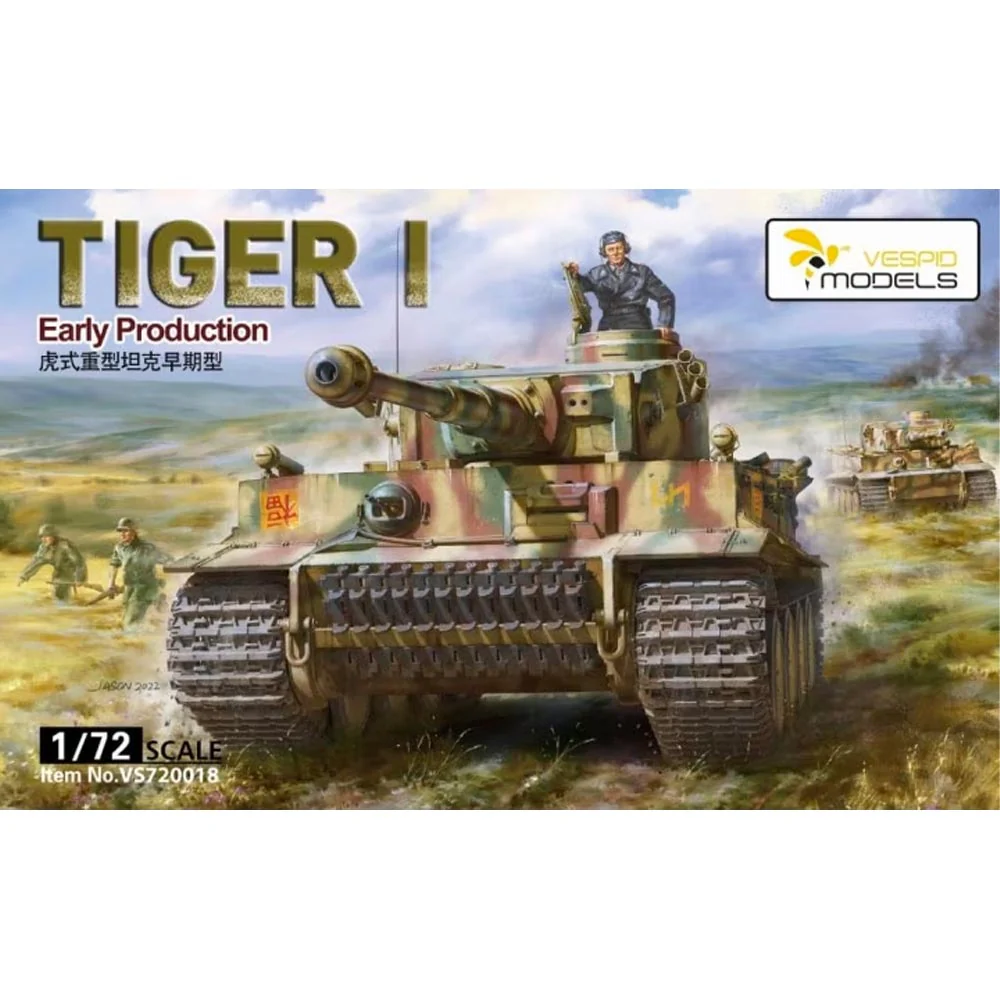
Vespid Models Tiger I Early Production 1:72 Tank Plastic Model Kit 720018
INCLUDES:
METAL BARREL
ETCH PARTS
3 DECAL OPTIONS
3D PRINTED MUZZLE
The Tiger I was a German heavy tank of World War II that operated beginning in 1942 in Africa and in the Soviet Union, usually in independent heavy tank battalions.
The tank was given its nickname "Tiger" by Ferdinand Porsche, and the Roman numeral was added after the Tiger II entered production.
It gave the German Army its first armoured fighting vehicle that mounted the 8.8 cm KwK 36 gun (derived from the 8.8 cm Flak 36). 1,347 were built between August 1942 and August 1944. After August 1944, production of the Tiger I was phased out in favour of the Tiger II.
While the Tiger I has been called an outstanding design for its time, it has also been called overengineered, using expensive materials and labour-intensive production methods.
In the early period Tiger was prone to certain types of track failures and breakdowns and was in general limited in range by its high fuel consumption. It was expensive to maintain, but generally mechanically reliable. It was difficult to transport and vulnerable to immobilisation when mud, ice, and snow froze between its overlapping and interleaved Schachtellaufwerk-pattern road wheels, often jamming them solid.
This was a problem on the Eastern Front in the muddy rasputitsa season and during periods of extreme cold.
METAL BARREL
ETCH PARTS
3 DECAL OPTIONS
3D PRINTED MUZZLE
The Tiger I was a German heavy tank of World War II that operated beginning in 1942 in Africa and in the Soviet Union, usually in independent heavy tank battalions.
The tank was given its nickname "Tiger" by Ferdinand Porsche, and the Roman numeral was added after the Tiger II entered production.
It gave the German Army its first armoured fighting vehicle that mounted the 8.8 cm KwK 36 gun (derived from the 8.8 cm Flak 36). 1,347 were built between August 1942 and August 1944. After August 1944, production of the Tiger I was phased out in favour of the Tiger II.
While the Tiger I has been called an outstanding design for its time, it has also been called overengineered, using expensive materials and labour-intensive production methods.
In the early period Tiger was prone to certain types of track failures and breakdowns and was in general limited in range by its high fuel consumption. It was expensive to maintain, but generally mechanically reliable. It was difficult to transport and vulnerable to immobilisation when mud, ice, and snow froze between its overlapping and interleaved Schachtellaufwerk-pattern road wheels, often jamming them solid.
This was a problem on the Eastern Front in the muddy rasputitsa season and during periods of extreme cold.
$6.88
Original: $22.95
-70%Vespid Models Tiger I Early Production 1:72 Tank Plastic Model Kit 720018—
$22.95
$6.88Product Information
Product Information
Shipping & Returns
Shipping & Returns
Description
INCLUDES:
METAL BARREL
ETCH PARTS
3 DECAL OPTIONS
3D PRINTED MUZZLE
The Tiger I was a German heavy tank of World War II that operated beginning in 1942 in Africa and in the Soviet Union, usually in independent heavy tank battalions.
The tank was given its nickname "Tiger" by Ferdinand Porsche, and the Roman numeral was added after the Tiger II entered production.
It gave the German Army its first armoured fighting vehicle that mounted the 8.8 cm KwK 36 gun (derived from the 8.8 cm Flak 36). 1,347 were built between August 1942 and August 1944. After August 1944, production of the Tiger I was phased out in favour of the Tiger II.
While the Tiger I has been called an outstanding design for its time, it has also been called overengineered, using expensive materials and labour-intensive production methods.
In the early period Tiger was prone to certain types of track failures and breakdowns and was in general limited in range by its high fuel consumption. It was expensive to maintain, but generally mechanically reliable. It was difficult to transport and vulnerable to immobilisation when mud, ice, and snow froze between its overlapping and interleaved Schachtellaufwerk-pattern road wheels, often jamming them solid.
This was a problem on the Eastern Front in the muddy rasputitsa season and during periods of extreme cold.
METAL BARREL
ETCH PARTS
3 DECAL OPTIONS
3D PRINTED MUZZLE
The Tiger I was a German heavy tank of World War II that operated beginning in 1942 in Africa and in the Soviet Union, usually in independent heavy tank battalions.
The tank was given its nickname "Tiger" by Ferdinand Porsche, and the Roman numeral was added after the Tiger II entered production.
It gave the German Army its first armoured fighting vehicle that mounted the 8.8 cm KwK 36 gun (derived from the 8.8 cm Flak 36). 1,347 were built between August 1942 and August 1944. After August 1944, production of the Tiger I was phased out in favour of the Tiger II.
While the Tiger I has been called an outstanding design for its time, it has also been called overengineered, using expensive materials and labour-intensive production methods.
In the early period Tiger was prone to certain types of track failures and breakdowns and was in general limited in range by its high fuel consumption. It was expensive to maintain, but generally mechanically reliable. It was difficult to transport and vulnerable to immobilisation when mud, ice, and snow froze between its overlapping and interleaved Schachtellaufwerk-pattern road wheels, often jamming them solid.
This was a problem on the Eastern Front in the muddy rasputitsa season and during periods of extreme cold.