🎉 Up to 70% Off Selected ItemsShop Sale

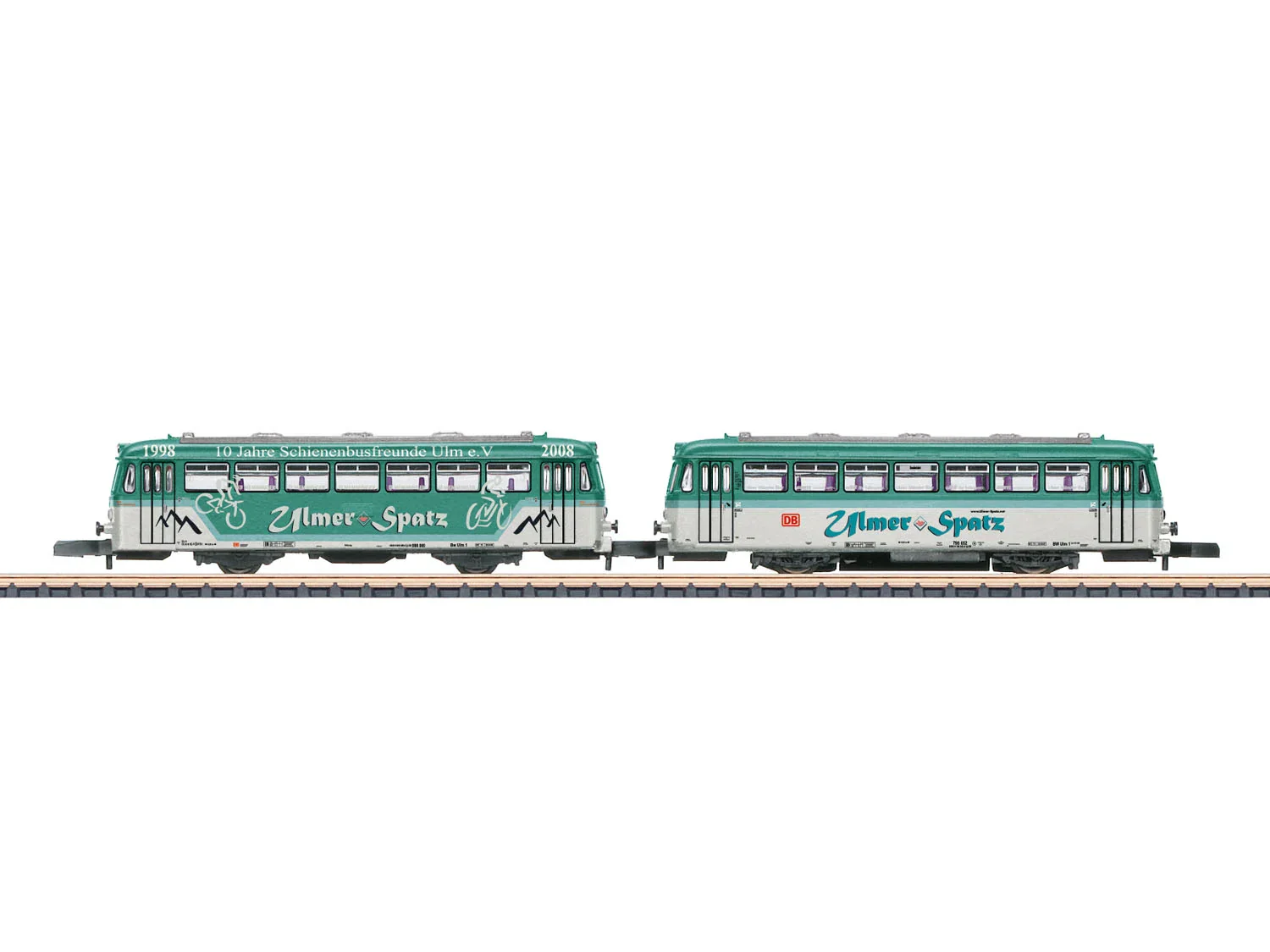
Marklin 88315 DBAG BR798 Ulmer Spatz Diesel Railcar & Trailer VI Z Gauge
DBAG BR798 Ulmer Spatz Diesel Railcar & Trailer VI
1:220 scale model produced by Marklin. This model is ready-to-run straight out of the box and would make a excellent addition to any model railway collection.
Features:
Analogue DC Model
Best suited to Epoch VI Model Railways
This model mainly operates in Germany
This model is decorated in DBAG company markings
Interior details reproduced.
LED interior lighting in motor car and trailer car.
Bell armature motor.
Details
The Uerdingen railbus VT 98 series, later classified under Classes 798 and BR 796, is one of the most iconic diesel railcar types in German railway history. Developed in the 1950s by the Uerdingen Wagon Works (Waggonfabrik Uerdingen), the VT 98 was created to revive passenger services on lightly trafficked branch lines where traditional steam trains were uneconomical. Its lightweight construction, simple mechanics and economical diesel power helped preserve rural and secondary passenger services across West Germany for decades.
The standard VT 98 was configured with two motors, enabling reliable performance and good acceleration for frequent stop services. Typically operated in multiple units or coupled with matching trailer cars classified as VB 98, the railbus was flexible for both low demand local runs and shuttle duties. From the late 1950s into the 1970s, large numbers of these units and trailers were in daily service on branch lines, suburban routes and valley railways, offering bright interiors and efficient operation compared with heavier rolling stock.
The VT 98’s simple, utilitarian design made it easy to maintain and inexpensive to run, contributing to its long service life. Many units were later repurposed for works trains, departmental use or preserved heritage operations after withdrawal from regular passenger service. Its distinctive railbus profile makes it instantly recognisable.
$73.93
Original: $246.45
-70%Marklin 88315 DBAG BR798 Ulmer Spatz Diesel Railcar & Trailer VI Z Gauge—
$246.45
$73.93Product Information
Product Information
Shipping & Returns
Shipping & Returns
Description
DBAG BR798 Ulmer Spatz Diesel Railcar & Trailer VI
1:220 scale model produced by Marklin. This model is ready-to-run straight out of the box and would make a excellent addition to any model railway collection.
Features:
Analogue DC Model
Best suited to Epoch VI Model Railways
This model mainly operates in Germany
This model is decorated in DBAG company markings
Interior details reproduced.
LED interior lighting in motor car and trailer car.
Bell armature motor.
Details
The Uerdingen railbus VT 98 series, later classified under Classes 798 and BR 796, is one of the most iconic diesel railcar types in German railway history. Developed in the 1950s by the Uerdingen Wagon Works (Waggonfabrik Uerdingen), the VT 98 was created to revive passenger services on lightly trafficked branch lines where traditional steam trains were uneconomical. Its lightweight construction, simple mechanics and economical diesel power helped preserve rural and secondary passenger services across West Germany for decades.
The standard VT 98 was configured with two motors, enabling reliable performance and good acceleration for frequent stop services. Typically operated in multiple units or coupled with matching trailer cars classified as VB 98, the railbus was flexible for both low demand local runs and shuttle duties. From the late 1950s into the 1970s, large numbers of these units and trailers were in daily service on branch lines, suburban routes and valley railways, offering bright interiors and efficient operation compared with heavier rolling stock.
The VT 98’s simple, utilitarian design made it easy to maintain and inexpensive to run, contributing to its long service life. Many units were later repurposed for works trains, departmental use or preserved heritage operations after withdrawal from regular passenger service. Its distinctive railbus profile makes it instantly recognisable.