🎉 Up to 70% Off Selected ItemsShop Sale


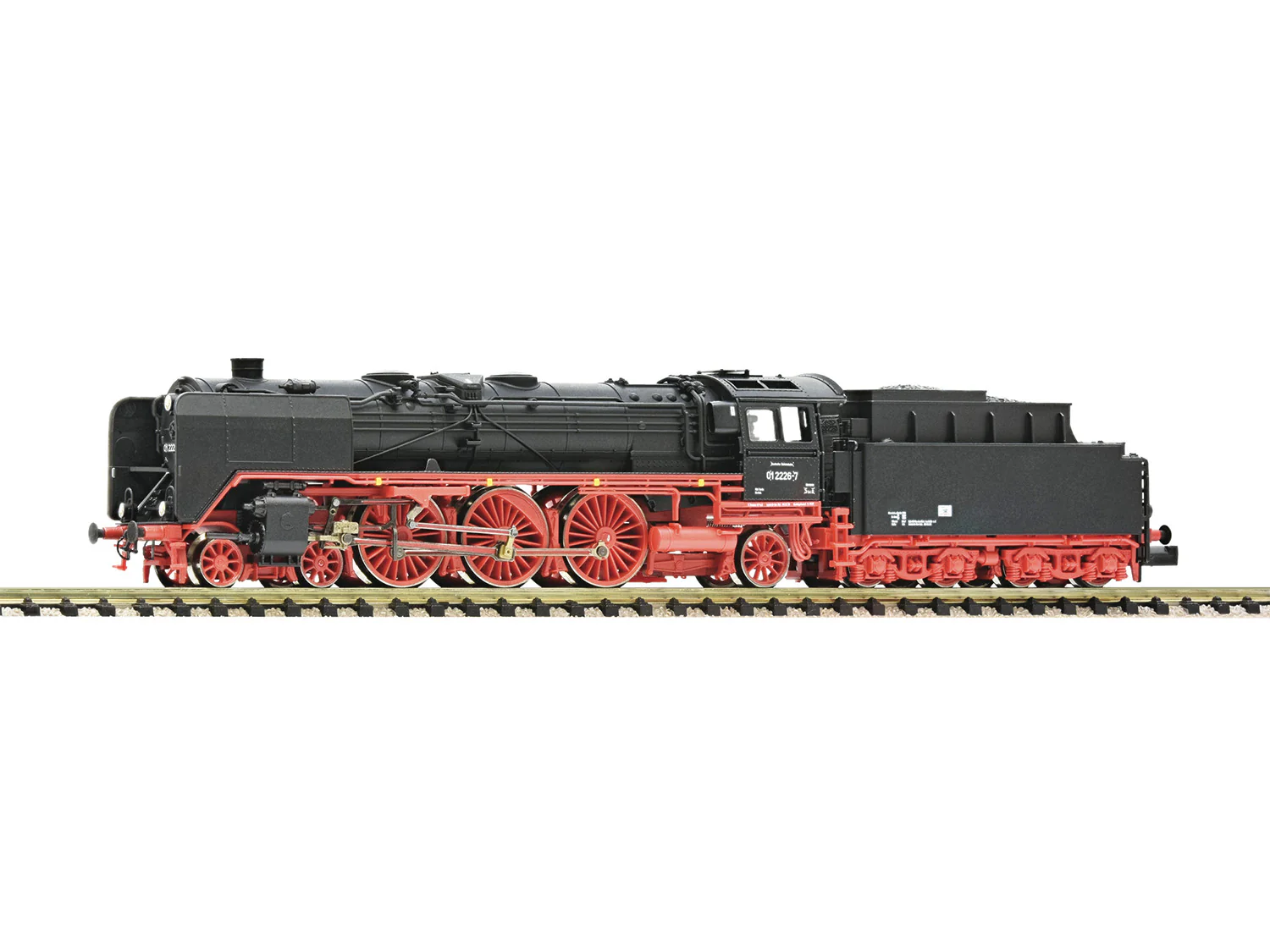
Fleischmann PO BR01 202 Steam Locomotive V (DCC-Sound) FM714574 N Gauge
PO BR01 202 Steam Locomotive V (DCC-Sound)
1:160 scale model produced by Fleischmann. This model is ready-to-run straight out of the box and would make a excellent addition to any model railway collection.
Features:
DCC Sound Model
Best suited to Epoch V Model Railways
This model mainly operates in Switzerland
Decorated in Private Owner company markings
Best suited to 192mm radius curves
Version as a museum exhibit locomotive
Smoke chamber door with central lock
Elaborate printing on the boiler rings and wheel tires
Additional alternator
Version with open front apron and "Witte" smoke deflectors
Unobstructed view between the boiler and chassis
Details
The DRG Class 01 is one of the most celebrated steam locomotives in German railway history and a defining symbol of express steam traction in the early 20th century. Developed for the Deutsche Reichsbahn-Gesellschaft (DRG) in the late 1920s, the Class 01 was the first standardised four-cylinder Pacific (2-C-1) express locomotive in Germany, designed to haul heavy passenger expresses at sustained high speeds over the expanding electrified and non-electrified network.
Introduced into service from 1926, the Class 01 combined a large firebox, efficient steam circuit and robust running gear to achieve reliable performance at speeds up to approximately 120 km/h. Its balanced design allowed it to handle long expresses with heavy consists, making it a natural choice for premier passenger trains connecting major cities such as Berlin, Hamburg, Munich and Frankfurt. As the flagship of the DRG’s express fleet, the Class 01 quickly became recognised for its distinctive appearance and strong performance.
Built in significant numbers through the 1930s, the Class 01 continued in service through the Second World War and into the post-war era with both Deutsche Bundesbahn in West Germany and Deutsche Reichsbahn in East Germany. Many locomotives were modernised with improved boilers, better braking systems and refinements to running gear, extending their operational lives well into the 1950s and 1960s until electrification and modern traction made steam progressively obsolete.
$118.78
Original: $395.95
-70%Fleischmann PO BR01 202 Steam Locomotive V (DCC-Sound) FM714574 N Gauge—
$395.95
$118.78Product Information
Product Information
Shipping & Returns
Shipping & Returns
Description
PO BR01 202 Steam Locomotive V (DCC-Sound)
1:160 scale model produced by Fleischmann. This model is ready-to-run straight out of the box and would make a excellent addition to any model railway collection.
Features:
DCC Sound Model
Best suited to Epoch V Model Railways
This model mainly operates in Switzerland
Decorated in Private Owner company markings
Best suited to 192mm radius curves
Version as a museum exhibit locomotive
Smoke chamber door with central lock
Elaborate printing on the boiler rings and wheel tires
Additional alternator
Version with open front apron and "Witte" smoke deflectors
Unobstructed view between the boiler and chassis
Details
The DRG Class 01 is one of the most celebrated steam locomotives in German railway history and a defining symbol of express steam traction in the early 20th century. Developed for the Deutsche Reichsbahn-Gesellschaft (DRG) in the late 1920s, the Class 01 was the first standardised four-cylinder Pacific (2-C-1) express locomotive in Germany, designed to haul heavy passenger expresses at sustained high speeds over the expanding electrified and non-electrified network.
Introduced into service from 1926, the Class 01 combined a large firebox, efficient steam circuit and robust running gear to achieve reliable performance at speeds up to approximately 120 km/h. Its balanced design allowed it to handle long expresses with heavy consists, making it a natural choice for premier passenger trains connecting major cities such as Berlin, Hamburg, Munich and Frankfurt. As the flagship of the DRG’s express fleet, the Class 01 quickly became recognised for its distinctive appearance and strong performance.
Built in significant numbers through the 1930s, the Class 01 continued in service through the Second World War and into the post-war era with both Deutsche Bundesbahn in West Germany and Deutsche Reichsbahn in East Germany. Many locomotives were modernised with improved boilers, better braking systems and refinements to running gear, extending their operational lives well into the 1950s and 1960s until electrification and modern traction made steam progressively obsolete.