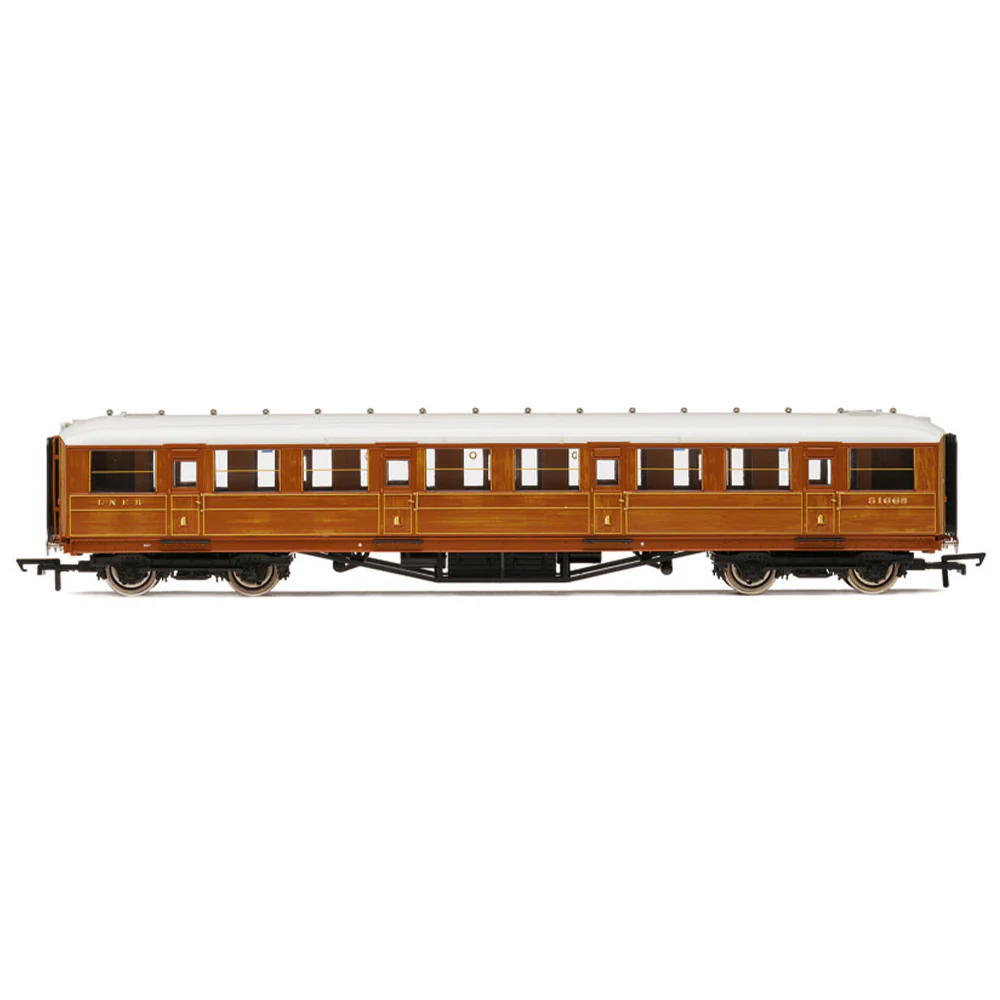

Dapol 57ft Stanier Non Corridor Composite BR Lined Maroon M19183M DA4P-010-152
1:76 Scale Coach produced in BR livery. This model features lots of expertly applied details as based on the prototype, a high level of body detail and excellent running characteristics.
Features
- 1:76 Scale Model
- New separately fitted underframe details
- Dynamo added
- Vacuum cylinders upgraded as separately fitted parts
- Extra framing added
- Brake shafts added
- Upgraded bogie pivot fixing
- New metal wheels
- New adaptor clips to for NEM pockets
- Re-polished glazing
- Suitable for a minimum radius of 438mm
Details
The 57ft Stanier Non-Corridor Composite Coach was introduced by the London, Midland & Scottish Railway (LMS) during the 1930s as part of Sir William Stanier’s influential programme to modernise the company’s coaching stock. Designed to offer a comfortable and efficient layout for local and suburban services, these coaches featured compartment-only accommodation without internal corridors, maximising passenger capacity while keeping construction costs economical.
Built with Stanier’s characteristic emphasis on improved riding quality and robust steel-panelled bodies, the 57ft non-corridor composites offered a mix of First and Third Class compartments, making them ideally suited to busy regional routes across the LMS network.
After nationalisation in 1948, many examples continued in service under British Railways, receiving updated liveries such as BR Lined Maroon and remaining in everyday use well into the 1950s and early 1960s. Their longevity and widespread deployment have made them a popular subject for railway historians and model enthusiasts alike.
Today, the 57ft Stanier Non-Corridor Composite is celebrated as a classic example of pre-war LMS coaching design, reflecting the transition from older wooden-bodied stock to the more modern steel-built vehicles that defined mid-20th-century British rail travel.
Product Information
Product Information
Shipping & Returns
Shipping & Returns
Description
1:76 Scale Coach produced in BR livery. This model features lots of expertly applied details as based on the prototype, a high level of body detail and excellent running characteristics.
Features
- 1:76 Scale Model
- New separately fitted underframe details
- Dynamo added
- Vacuum cylinders upgraded as separately fitted parts
- Extra framing added
- Brake shafts added
- Upgraded bogie pivot fixing
- New metal wheels
- New adaptor clips to for NEM pockets
- Re-polished glazing
- Suitable for a minimum radius of 438mm
Details
The 57ft Stanier Non-Corridor Composite Coach was introduced by the London, Midland & Scottish Railway (LMS) during the 1930s as part of Sir William Stanier’s influential programme to modernise the company’s coaching stock. Designed to offer a comfortable and efficient layout for local and suburban services, these coaches featured compartment-only accommodation without internal corridors, maximising passenger capacity while keeping construction costs economical.
Built with Stanier’s characteristic emphasis on improved riding quality and robust steel-panelled bodies, the 57ft non-corridor composites offered a mix of First and Third Class compartments, making them ideally suited to busy regional routes across the LMS network.
After nationalisation in 1948, many examples continued in service under British Railways, receiving updated liveries such as BR Lined Maroon and remaining in everyday use well into the 1950s and early 1960s. Their longevity and widespread deployment have made them a popular subject for railway historians and model enthusiasts alike.
Today, the 57ft Stanier Non-Corridor Composite is celebrated as a classic example of pre-war LMS coaching design, reflecting the transition from older wooden-bodied stock to the more modern steel-built vehicles that defined mid-20th-century British rail travel.