🎉 Up to 70% Off Selected ItemsShop Sale


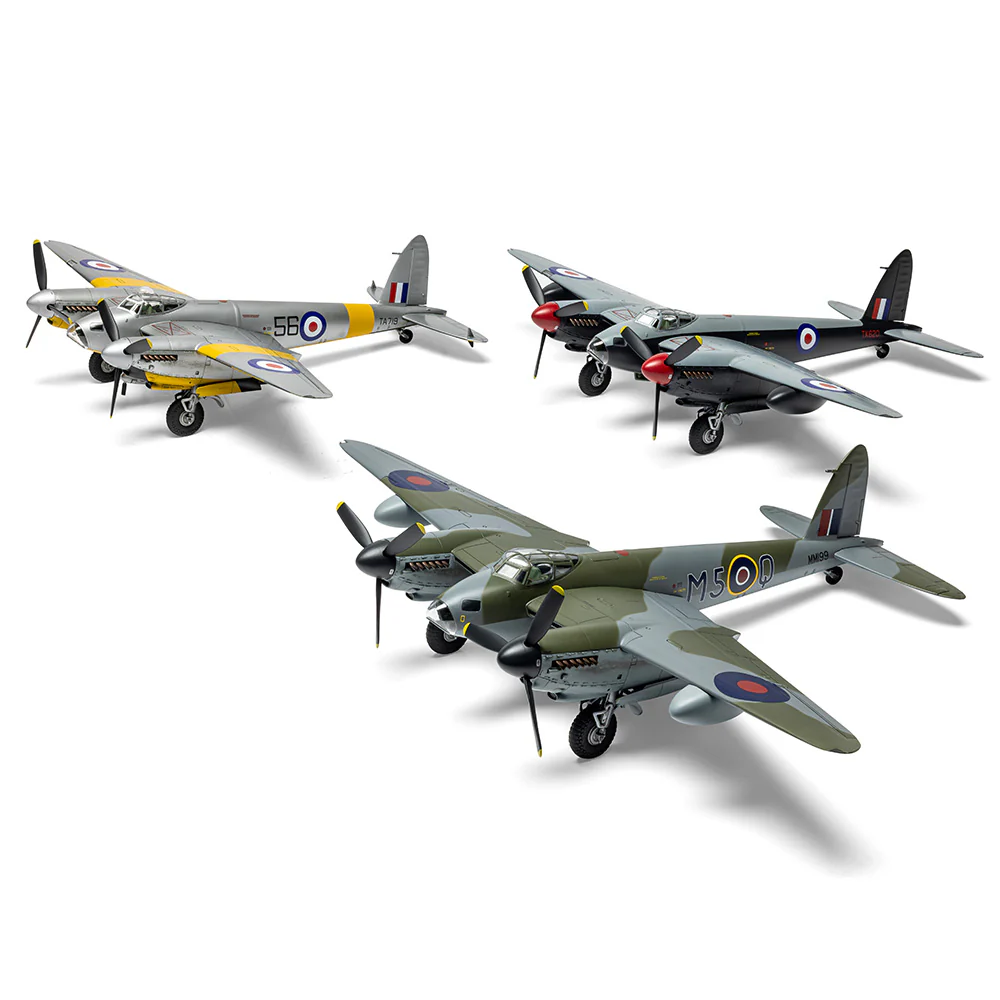


Airfix A04070 de Havilland Mosquito B.XVI/B.35/TT.35 1:72 Model Kit
de Havilland Mosquito B.XVI/B.35/TT.35
From 1944, the de Havilland Mosquito B.XVI was delivered to front line squadrons. The B.XVI was a development of the earlier B.IX variant, but a new pressurised cabin had been incorporated so the aircraft could operate at high altitude. Although it was unarmed, the B.XVI could carry a 3,000Ib bomb load. Not long after the start of B.XVI production, modifications were incorporated on the production line to allow a 4,000Ib ‘Cookie’ or blockbuster bomb to be carried internally, a weapon which possessed devastating destructive capability. Combining the power of these fearsome weapons with the legendary speed and bombing accuracy associated with Mosquito operations allowed Bomber Command to keep the pressure on the enemy throughout the latter stages of WWII.
By this time, with its first test flight on 12 March 1945, the last bomber version of the Mosquito, B.35, was at an advanced stage of development. Powered by the Merlin 113/114 engine, the war ended before the B.35 entered service. However, it had a long career with the post-war RAF, serving operationally until early 1954.
When the RAF’s new jet-powered replacement for the Mosquito, the English Electric Canberra was introduced to service in May 1951, the Mosquito B.35 was relegated from frontline operations and many B.35s continued to operate in secondary roles after conversion to target tugs. These conversions were undertaken by Northamptonshire-based Brooklands Aviation Ltd and called TT.35s. These remained in service with Civilian Anti Aircraft Cooperation Units (CAACU) until the last one was retired in May 1963. The TT.35’s target-towing system consisted of a wind-driven ML Type G winch with 6,000ft of non-twisting steel cable towing a fabric target drogue.
Kit features new variants of the highly detailed Airfix 1:72 de Havilland Mosquito
- 21 new parts included, featuring open and closed bulged bomb bay doors, 4000lb “Cookie” bomb, bomb bay interior parts, target towing winch parts and other details.
- Marking options for 3 distinctive new schemes which tell the story of the Mosquito’s changing roles in late World War 2 and into the post-war era- including the colourful TT.35 target towing variant “TA719” which survived into preservation.
Decal Options
de Havilland DH.98 Mosquito B.35
Aircraft flown by S/L Rupert G. W. Oakley DSO, DFC, DFM, No.139 Squadron, Royal Air Force Hemswell, Lincolnshire, England, 1950.
de Havilland DH.98 Mosquito TT.35
No.3 Civilian Anti-Aircraft Co-Operation Unit (CAACU), Royal Air Force Exeter, Devon, England, 1955.
de Havilland DH.98 Mosquito Mk.XVI
No.128 Squadron, Royal Air Force Wyton, Cambridgeshire, England, 1944.
From 1944, the de Havilland Mosquito B.XVI was delivered to front line squadrons. The B.XVI was a development of the earlier B.IX variant, but a new pressurised cabin had been incorporated so the aircraft could operate at high altitude. Although it was unarmed, the B.XVI could carry a 3,000Ib bomb load. Not long after the start of B.XVI production, modifications were incorporated on the production line to allow a 4,000Ib ‘Cookie’ or blockbuster bomb to be carried internally, a weapon which possessed devastating destructive capability. Combining the power of these fearsome weapons with the legendary speed and bombing accuracy associated with Mosquito operations allowed Bomber Command to keep the pressure on the enemy throughout the latter stages of WWII.
By this time, with its first test flight on 12 March 1945, the last bomber version of the Mosquito, B.35, was at an advanced stage of development. Powered by the Merlin 113/114 engine, the war ended before the B.35 entered service. However, it had a long career with the post-war RAF, serving operationally until early 1954.
When the RAF’s new jet-powered replacement for the Mosquito, the English Electric Canberra was introduced to service in May 1951, the Mosquito B.35 was relegated from frontline operations and many B.35s continued to operate in secondary roles after conversion to target tugs. These conversions were undertaken by Northamptonshire-based Brooklands Aviation Ltd and called TT.35s. These remained in service with Civilian Anti Aircraft Cooperation Units (CAACU) until the last one was retired in May 1963. The TT.35’s target-towing system consisted of a wind-driven ML Type G winch with 6,000ft of non-twisting steel cable towing a fabric target drogue.
Kit features new variants of the highly detailed Airfix 1:72 de Havilland Mosquito
- 21 new parts included, featuring open and closed bulged bomb bay doors, 4000lb “Cookie” bomb, bomb bay interior parts, target towing winch parts and other details.
- Marking options for 3 distinctive new schemes which tell the story of the Mosquito’s changing roles in late World War 2 and into the post-war era- including the colourful TT.35 target towing variant “TA719” which survived into preservation.
Decal Options
de Havilland DH.98 Mosquito B.35
Aircraft flown by S/L Rupert G. W. Oakley DSO, DFC, DFM, No.139 Squadron, Royal Air Force Hemswell, Lincolnshire, England, 1950.
de Havilland DH.98 Mosquito TT.35
No.3 Civilian Anti-Aircraft Co-Operation Unit (CAACU), Royal Air Force Exeter, Devon, England, 1955.
de Havilland DH.98 Mosquito Mk.XVI
No.128 Squadron, Royal Air Force Wyton, Cambridgeshire, England, 1944.
$24.99
Airfix A04070 de Havilland Mosquito B.XVI/B.35/TT.35 1:72 Model Kit—
$24.99
Product Information
Product Information
Shipping & Returns
Shipping & Returns
Description
de Havilland Mosquito B.XVI/B.35/TT.35
From 1944, the de Havilland Mosquito B.XVI was delivered to front line squadrons. The B.XVI was a development of the earlier B.IX variant, but a new pressurised cabin had been incorporated so the aircraft could operate at high altitude. Although it was unarmed, the B.XVI could carry a 3,000Ib bomb load. Not long after the start of B.XVI production, modifications were incorporated on the production line to allow a 4,000Ib ‘Cookie’ or blockbuster bomb to be carried internally, a weapon which possessed devastating destructive capability. Combining the power of these fearsome weapons with the legendary speed and bombing accuracy associated with Mosquito operations allowed Bomber Command to keep the pressure on the enemy throughout the latter stages of WWII.
By this time, with its first test flight on 12 March 1945, the last bomber version of the Mosquito, B.35, was at an advanced stage of development. Powered by the Merlin 113/114 engine, the war ended before the B.35 entered service. However, it had a long career with the post-war RAF, serving operationally until early 1954.
When the RAF’s new jet-powered replacement for the Mosquito, the English Electric Canberra was introduced to service in May 1951, the Mosquito B.35 was relegated from frontline operations and many B.35s continued to operate in secondary roles after conversion to target tugs. These conversions were undertaken by Northamptonshire-based Brooklands Aviation Ltd and called TT.35s. These remained in service with Civilian Anti Aircraft Cooperation Units (CAACU) until the last one was retired in May 1963. The TT.35’s target-towing system consisted of a wind-driven ML Type G winch with 6,000ft of non-twisting steel cable towing a fabric target drogue.
Kit features new variants of the highly detailed Airfix 1:72 de Havilland Mosquito
- 21 new parts included, featuring open and closed bulged bomb bay doors, 4000lb “Cookie” bomb, bomb bay interior parts, target towing winch parts and other details.
- Marking options for 3 distinctive new schemes which tell the story of the Mosquito’s changing roles in late World War 2 and into the post-war era- including the colourful TT.35 target towing variant “TA719” which survived into preservation.
Decal Options
de Havilland DH.98 Mosquito B.35
Aircraft flown by S/L Rupert G. W. Oakley DSO, DFC, DFM, No.139 Squadron, Royal Air Force Hemswell, Lincolnshire, England, 1950.
de Havilland DH.98 Mosquito TT.35
No.3 Civilian Anti-Aircraft Co-Operation Unit (CAACU), Royal Air Force Exeter, Devon, England, 1955.
de Havilland DH.98 Mosquito Mk.XVI
No.128 Squadron, Royal Air Force Wyton, Cambridgeshire, England, 1944.
From 1944, the de Havilland Mosquito B.XVI was delivered to front line squadrons. The B.XVI was a development of the earlier B.IX variant, but a new pressurised cabin had been incorporated so the aircraft could operate at high altitude. Although it was unarmed, the B.XVI could carry a 3,000Ib bomb load. Not long after the start of B.XVI production, modifications were incorporated on the production line to allow a 4,000Ib ‘Cookie’ or blockbuster bomb to be carried internally, a weapon which possessed devastating destructive capability. Combining the power of these fearsome weapons with the legendary speed and bombing accuracy associated with Mosquito operations allowed Bomber Command to keep the pressure on the enemy throughout the latter stages of WWII.
By this time, with its first test flight on 12 March 1945, the last bomber version of the Mosquito, B.35, was at an advanced stage of development. Powered by the Merlin 113/114 engine, the war ended before the B.35 entered service. However, it had a long career with the post-war RAF, serving operationally until early 1954.
When the RAF’s new jet-powered replacement for the Mosquito, the English Electric Canberra was introduced to service in May 1951, the Mosquito B.35 was relegated from frontline operations and many B.35s continued to operate in secondary roles after conversion to target tugs. These conversions were undertaken by Northamptonshire-based Brooklands Aviation Ltd and called TT.35s. These remained in service with Civilian Anti Aircraft Cooperation Units (CAACU) until the last one was retired in May 1963. The TT.35’s target-towing system consisted of a wind-driven ML Type G winch with 6,000ft of non-twisting steel cable towing a fabric target drogue.
Kit features new variants of the highly detailed Airfix 1:72 de Havilland Mosquito
- 21 new parts included, featuring open and closed bulged bomb bay doors, 4000lb “Cookie” bomb, bomb bay interior parts, target towing winch parts and other details.
- Marking options for 3 distinctive new schemes which tell the story of the Mosquito’s changing roles in late World War 2 and into the post-war era- including the colourful TT.35 target towing variant “TA719” which survived into preservation.
Decal Options
de Havilland DH.98 Mosquito B.35
Aircraft flown by S/L Rupert G. W. Oakley DSO, DFC, DFM, No.139 Squadron, Royal Air Force Hemswell, Lincolnshire, England, 1950.
de Havilland DH.98 Mosquito TT.35
No.3 Civilian Anti-Aircraft Co-Operation Unit (CAACU), Royal Air Force Exeter, Devon, England, 1955.
de Havilland DH.98 Mosquito Mk.XVI
No.128 Squadron, Royal Air Force Wyton, Cambridgeshire, England, 1944.